A company is awarded a significant contract. The monthly production demands rise, but the facility hasn’t suddenly gained more floors, employees with experience or hours of work per daytime. While adding another shift might temporarily improve the situation, it may be the cause of additional labor as well as training, supervision, and demands for quality-control.
This situation highlights a major motive behind robotic automation. Robotics is not just replacing humans with machines. A good application could change the way that manufacturers use their production capacity.
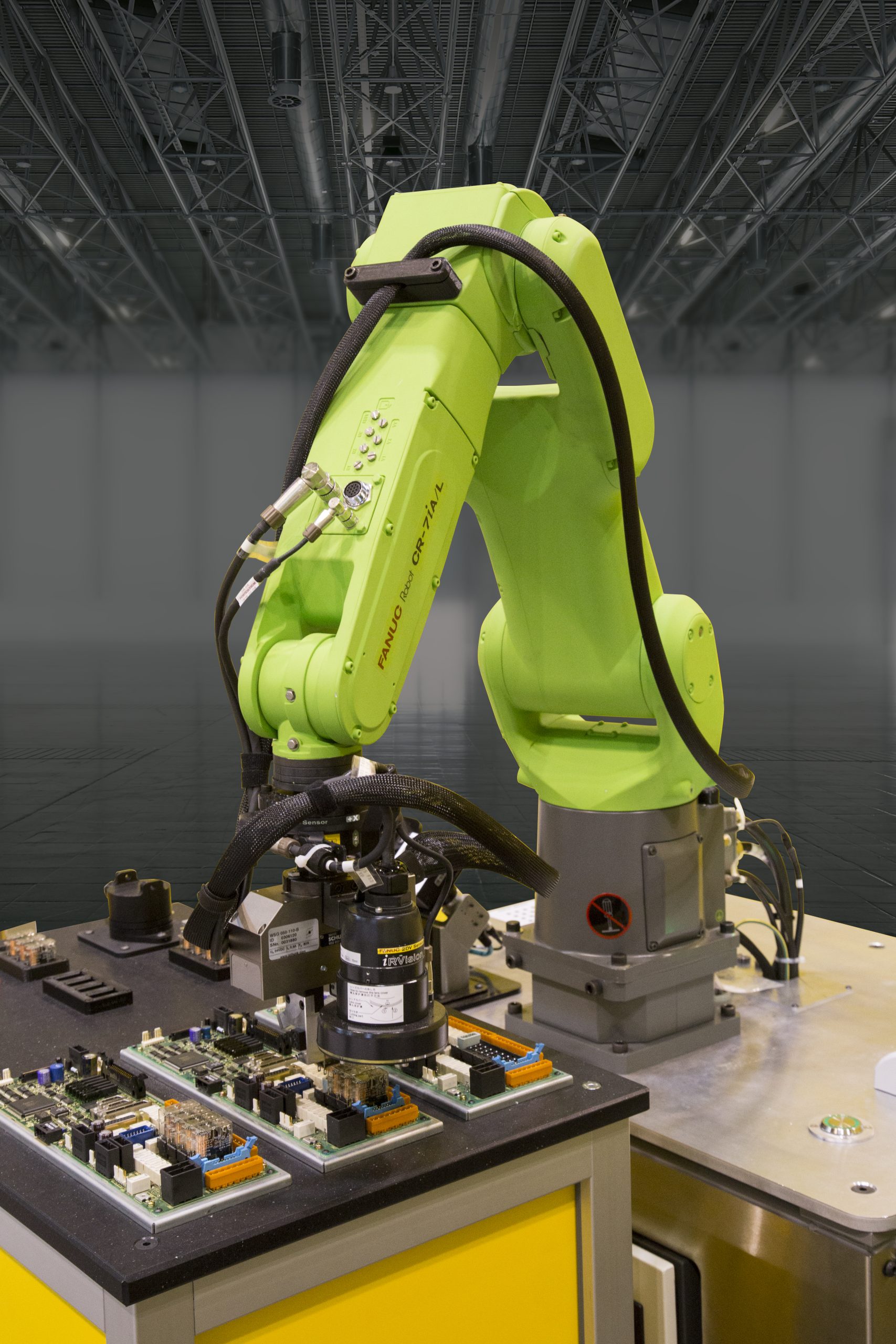
Image credit: automatedsolutions.com.au
Check out the Seconds that Disappear Between Products
Inefficient manufacturing may not be obvious. Imagine a worker spending 15 minutes searching for a part, 10 seconds applying the material and several seconds moving it. On a single part, the difference is insignificant. These seconds add up when multiplied by thousands.
Wasted material is no different. A tiny amount of leftover coating or dispensing material multiplied throughout a production run that is high-volume can become a meaningful expense.
Companies considering robotic automation Australia projects can benefit from examining these small, repeated losses before deciding what equipment they need. The needs analysis conducted by ASA is designed to uncover bottlenecks as well problems with quality, waste and other processes that could affect an automation project.
The robot needs to be able to accommodate the processes around it.
Selecting a robot is only one of the engineering decisions. It might be necessary to install tooling, protection and controls, sensors as well as conveyers, fixtures electronic integration, and communications with existing production equipment. Engineers should consider the reach of the robot and its payload, and how it interact with its surroundings and move about.
ASA offers conceptual development, design of systems and offline programming in its approach to robotic automation. The digital simulation allows engineers to explore configurations, estimate cycle times, and evaluate the system before it is operating on the floor of a customer’s premises. It’s particularly useful when there is a limited space available or when the new robotics has to integrate with a production line.
Painting and Dispensing demonstrate why Repeatability Matters
Certain manufacturing processes highlight the value of controlled movement particularly well. Imagine applying a coating to hundreds of parts. It’s not enough to finish every component in a short time. From the start of production through the conclusion, the movement, speed of the machine, the distance and the application have to be managed.
Our specialists have experience dispensing and painting across various industries such as automotive and aerospace. In these areas industrial robotic automation could ensure that the same program is repeated while reducing exposure of employees to physically demanding or potentially hazardous processes.
A better management of waste material can also help improve productivity by decreasing the amount of unneeded material consumed.
The System Will Still Need people after the installation.
Automation doesn’t eliminate the need for skilled manufacturing. It transforms the knowledge needed to operate and maintain the process.
Employees should be trained to use equipment safely as well as to spot abnormal behavior or malfunctioning components, and perform necessary maintenance. Production requirements may also change, meaning processes and programs may require modifications later.
ASA offers training on-site covering safety, programming, troubleshooting and mechanical and electrical maintenance. The company provides servicing and assistance for assessing the condition of equipment and taking care to address wear throughout the system’s lifetime.
Capacity is more than just working faster
For Australian manufacturers, increasing capacity doesn’t mean purchasing larger buildings or increasing the amount of labor required to perform repetitive tasks. Sometimes, the best question is whether the current manufacturing process can be designed differently.
ASA has been developing and integrated automation solutions since 2002, and has been supporting manufacturers in Australia and also projects around the world. The method is based on analysis of needs and engineering, simulations, FANUC robotic integration training, and even servicing.
The objective isn’t automation for the sake of it. A system that is worth the gold it’s worth ought to bring tangible benefits to an enterprise, including higher reliability in production, improved quality manufacturing processes, and safer ones. It also means less waste.