The first wave of artificial intelligence revealed that software could comprehend the language of people, detect patterns and help humans with more complex tasks. The majority of these systems, however relied on the sending of data to distant servers to process before giving a result. Cloud computing, even though it has accelerated AI adoption, also presented challenges in terms of the speed of processing and privacy. It also increased infrastructure costs.
Many engineering teams are working towards the opposite view. In place of treating artificial intelligence as a service that is far away engineers are now designing systems to execute closer to where the decision are taken. This trend is driving the growth of on device AI. This allows applications to react faster, decrease dependence on external infrastructures and have better control over information that is confidential.
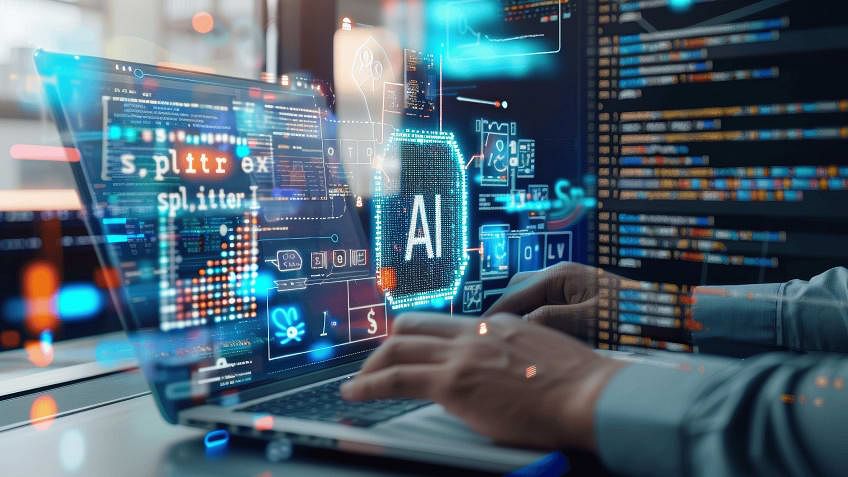
Modern AI requires infrastructure designed to handle real-world tasks
The selection of the language model alone is not enough to build intelligent software. The performance of the software is largely dependent on the architecture supporting it. Efficiency of runtime, availability, observability, security and scalability all affect whether an AI application can be successful in the real world.
The complexity of the world has increased the demand for a stronger AI agent infrastructure that is capable of creating autonomous workflows, intelligent decision-making and constant execution. Rather than relying on generic platforms designed for each possible use case most organizations prefer specialized infrastructure optimized for their particular operational needs.
Thyn was developed around this philosophy. The company does not deliver a single AI app, but instead creates runtime engines that support multiple specialized solutions while allowing them to grow independently. This architectural approach lets engineering teams focus on solving problems rather than constantly rebuilding core infrastructure.
Better tools help developers build better systems
AI will be integrated into more software and applications, and developers must have access to more than just APIs. They need environments that facilitate deployment, debugging, monitoring, testing, and runtime management.
Modern AI tools for developers are focused on transparency and control more than ever before. Developers are trying to determine the latency of their systems, improve resource utilization and better understand how systems work under high load.
Thyn invests heavily in the foundations of engineering, focusing on the performance of systems that can be measured than marketing claims. Research on runtime deployment strategies, evaluation frameworks, user experience, and observability are treated as essential engineering disciplines that enhance every product within its ecosystem.
The benefits of specialized intelligence are superior to one-size-fits-all platforms
It is not the case that every AI workstation operates in the same way under the same conditions. Financial trading, cryptographic apps, marketing automation, embedded software and autonomous systems have distinct performance specifications, security models, and operational restrictions.
Instead of putting every application to use the same infrastructure, Thyn develops dedicated engines designed around specific domains. It allows applications to be developed independently, yet still benefitting from research and management.
The same principle is beginning to influence AI coding agents. Coding agents of the present, rather than being general-purpose tools, are becoming more specific. They aid developers to write code analyse repositories and automate repetitive engineering tasks while being integrated into existing processes for development.
Intelligence to help make decisions more informed are taken
Artificial intelligence’s future is moving beyond simply generating information. Intelligent systems are becoming more adept at analyzing contexts, take decisions and take actions quickly.
Running AI locally provides significant advantages for products that require speed, dependability and security. On-device AI minimizes the dependence of networks and latency. It also allows applications to continue to function even when connectivity is not available. It creates a smoother user experience, while also giving companies greater control over their data and infrastructure.
In the same way, AI agent infrastructure that is scalable will ensure that intelligent systems can be observed as well as manageable and flexible when demands alter.
Thyn is a paradigm shift in software development by focusing more on creating an institutional base for intelligent software than just looking at individual applications. The company’s advanced runtime architecture with a specialized engine, strong AI development tool and the latest AI code agents are helping shape an environment in which AI is more effective, faster, safe, reliable, and ultimately more valuable for the developers that create the next generation intelligent products.