To produce quality 3D content, it had to take a mixture of technical knowledge, artistic talent and lots of time. Designers manually sculpted shapes applied textures, changed lighting and prepared files for different platforms. Artificial intelligence has changed the way they work. Modern tools based on AI are able to create 3D models very quickly. The process usually begins with a prompt for text or just a picture.
This shift is making 3D design easier for novices and professionals alike, opening the door for speedier production and more creative exploration.
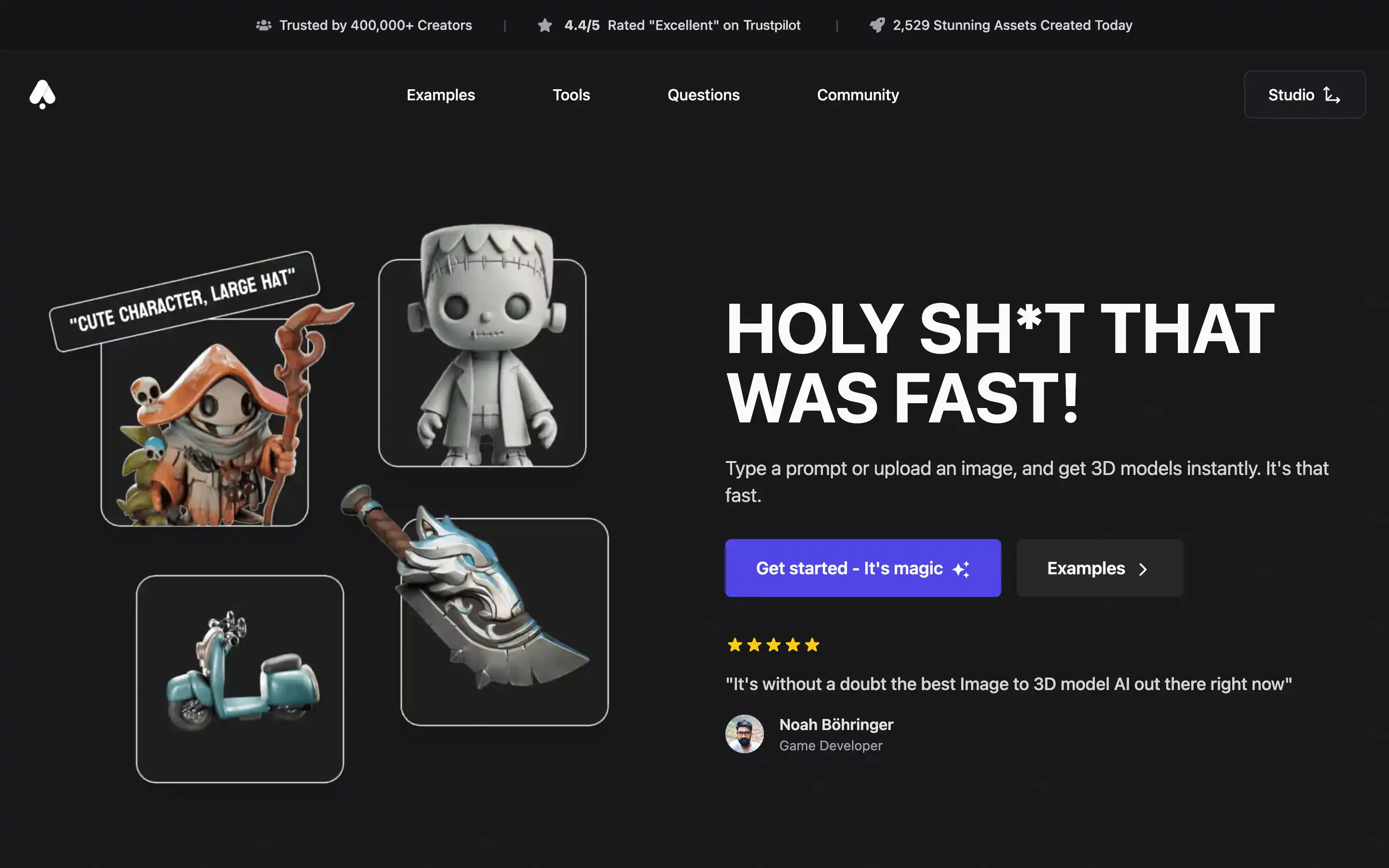
Within minutes, change from picture to 3D model
One of the most striking developments in this field is the conversion of images into 3D models technology. Instead of building objects from scratch technology analyzes images to detect shapes and depths, and then converts them into a accessible 3D model.
This capability is particularly useful for industries that depend on speed and precision in their visuals. Architectural professionals can visualize the structure before beginning building, and product designers and game developers are able to quickly create prototypes. It is not just marketers and educators who benefit from the ability to transform ideas from visuals into 3D interactive content.
The savings in time are substantial. It’s possible to complete what used to take days of modeling, texture, and optimization in just an hour. This allows teams more time to work on concepts instead of creating each part manually.
AI 3D modeling is becoming more popular
AI 3D modeling tools are growing in popularity due to their ability to simplify processes. Artificial intelligence systems that are developed on large databases can create realistic materials and shapes that are consistent and accurate.
This speed improves not only productivity, but also creativity. Designers can test multiple variations of an idea in a short period, compare results, and select the most effective option. This process of rapid iteration is now a necessity in various industries such as film production, advertising, virtual reality and e-commerce visualization.
Accessibility is an additional benefit. Modern platforms enable people to develop professional-quality content even if they’ve got little or no 3D experience.
Integration seamless into professional workflows
For professionals, compatibility and speed are equally important. The latest AI platforms that support 3D models have been designed to seamlessly integrate with existing pipelines. Models are available in a range of formats, such as FBX (File Format), OBJ (Object File Format), GLB (Global Language Base), STL and USDZ. This makes them easily usable in 3D printers, rendering engines, and game engines.
Databases of assets that are organized play an essential role in efficiency in production. The ability to store every model created in a searchable database helps teams ensure that projects are organized and manageable. Filtering with tags and downloading large amounts of files and quickly regaining previous versions can save hours of administrative time.
Security and privacy are becoming more common and provide creators with the ability to use their work in commercial and creative projects immediately.
AI Tools to Control and Improve Precision
Modern AI tools for 3D models often have detailed adjustments features. Users can set exact measurements, define pivot points and make sure of that the proper position of objects is achieved in scenes. These features are essential for the animation of architectural models and simulation where precision is essential.
Artificial intelligence can also be used to create textures. This allows the creators of realistic materials to swiftly produce them. This removes the need to apply paint by hand, while ensuring an excellent texture.
Look Ahead at the Future of 3D Model AI
As artificial intelligence continues to evolve, the possibilities for 3D model AI will expand further. As AI continues to advance and improve, advanced AI models will be able to create whole environments optimise assets and modify models with no additional steps.
Platforms built specifically for this purpose are already showing how effective tools are. 3D AI Studio is the ideal studio for 3D Assets. It’s a new type of software that makes creation easier processes, improves workflows and lets creators move from a concept to a final model in a short time with minimal effort.
Conclusion
Digital content production is transformed by the ability to quickly move from a concept to a finished product. Technology for converting images into 3D models as well as advanced AI 3D models tools allow creators to move beyond traditional processes that are slow and inefficient.
As these technologies improve and advance, they will have a bigger impact on industries ranging from gaming and entertainment to engineering and education that will make high-quality 3D creation faster, smarter and more easily accessible than ever before.